| |
Welcome to the ENSP newsletter, your source of information on tobacco control across the WHO European Region. At ENSP, our mission is to end the tobacco epidemic and beat cancer through collaborative efforts, research, and advocacy.
Join us in our journey to achieve a tobacco- and nicotine-free world! |
|
|---|
|
|
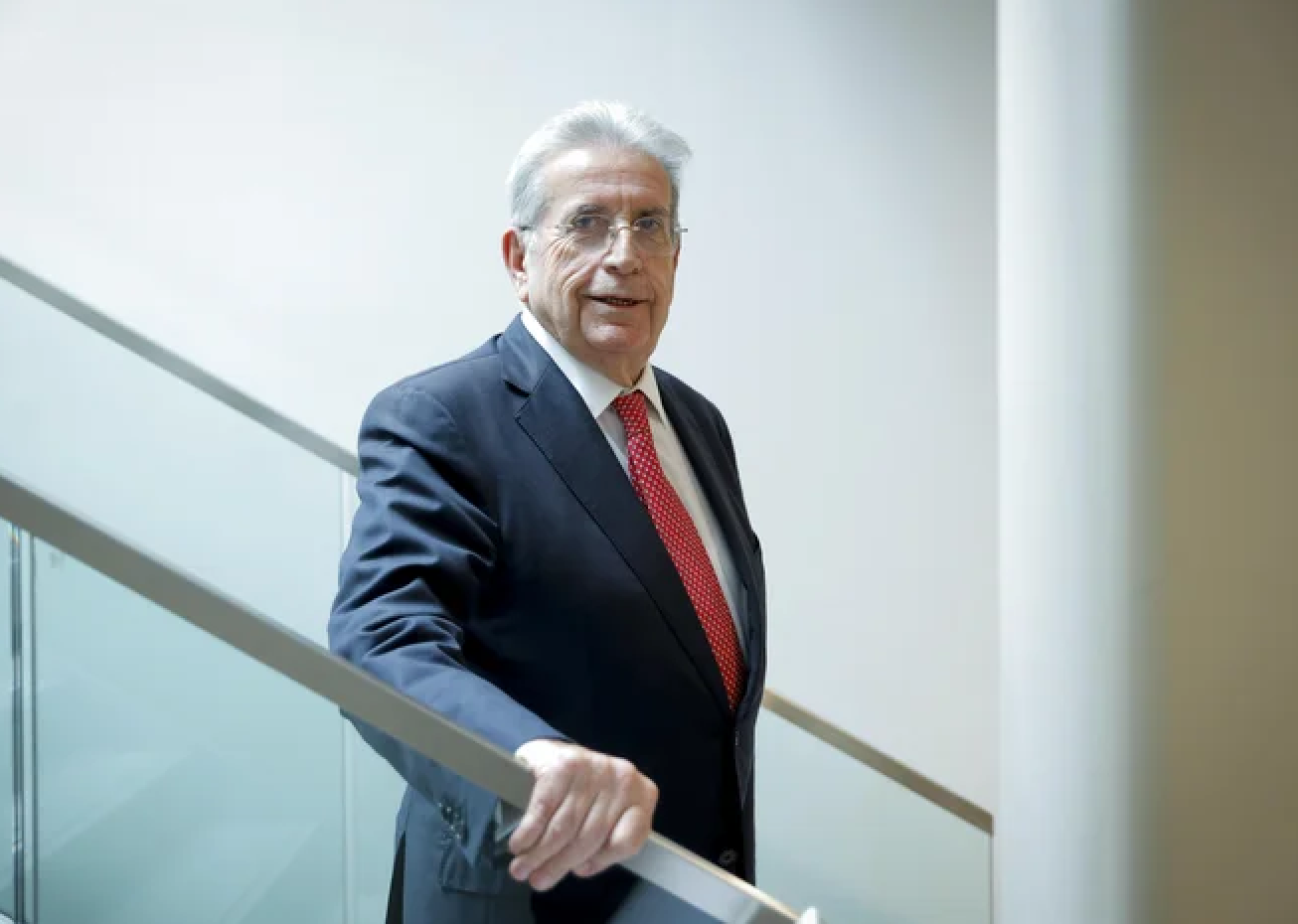
Presidential announcement from Prof Panagiotis Behrakis
|
|
|---|
|
Dear friends, ENSP members and collaborators,
It is with great honor and a deep sense of responsibility that I assume the duties of President of ENSP at this time, and I would like to thank you all for your trust.
|
|
|---|
|
The current European environment is undeniably demanding and offers limited support for the financial sustainability of our organization. Nevertheless, ENSP, with its 28-year history in the field of tobacco control, continues its steady and dedicated work to address the greatest epidemic of all time, always guided by the principles of the World Health Organization and the directives of the European Union.
|
|
|
|
|
The international community expects us to provide ideas, proposals, and actions aimed at reducing the use of tobacco products, while the societies of EU member states have become increasingly aware of the problem, yet still struggle to manage it effectively.
The target of reducing smoking prevalence to below 5% by 2040 was first introduced by ENSP at our General Assembly in 2011, and it has remained a fundamental element of Article 3 in our current statutes. This objective is now officially endorsed by the European Union (following the European Commission’s decision of February 3, 2021), and our shared dedication to its achievement will continue with steadfast determination.
Our actions will be structured to engage European citizens directly, with a strong focus on tobacco and nicotine use, cessation and prevention. A particular priority will be to protect the new generations and to counter the organized and targeted promotion of certain tobacco and nicotine products to pre-adolescent and adolescent children.
Through the strategic use of flavors, colors, aromas, and designs clearly appealing to those aged 10 to 15, specific actors within the tobacco industry are creating hundreds of thousands of nicotine-addicted young people, individuals who are likely to remain lifelong users of tobacco products. This represents a profoundly serious public health challenge, one in which ENSP continues to play a leading role.
Alongside our essential work on regulatory measures, we will intensify efforts to develop communication programmes that deliver our messages directly to European citizens, motivating them to take an active role in reducing tobacco and nicotine use, with particular emphasis on addressing the growing issue of electronic cigarette consumption among children.
Public awareness of smoking risks is no longer enough. We must engage and empower citizens to take meaningful action. A key pillar of our strategy will be the education of educators and parents. Only by strengthening these key groups can we effectively protect and ultimately reach the child.
The road ahead will undoubtedly present challenges. Yet when the goal is clearly defined and the approach firmly grounded in scientific evidence, the outcome can only be positive. Together, we will achieve our goals. I remain optimistic that, with the valuable support of the Members of the Board namely Danielle van Kalmthout, Raquel Fernandez Megina, Maria Sofia Cattaruzza, Loïc Josseran, Luke Clancy and Helen Stjerna, our Secretary General Cornel Radu-Loghin, and our Scientific Director Charis Girvalaki, we will successfully advance the mission and vision of ENSP.
Panagiotis Behrakis MD, PhD(McGiLL), FCCP
Pulmonologist, Intensivist, Athens Med. Center
Former Associate Professor of Athens and Harvard University
Researcher, Biomedical Research Foundation of Athens Academy
|
|
|---|
|
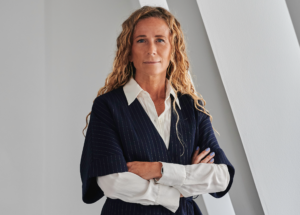
Warm welcome to the newest ENSP Board Member, Helen Stjerna
|
|
|---|
|
During the latest General Assembly, a series of elections took place. In this context, the mandates of the Past President, Prof Dr Florin Dumitru Mihălţan and Board Member, Dr Krzysztof Przewoźniak have come to an end and Ms Helen Stjerna from A Non Smoking Generation (Sweden) has been elected as new Board Member for the next 3 years. |
|
|
|
|
|
The 11th Conference of the Parties of the WHO FCTC
|
|
|---|
|
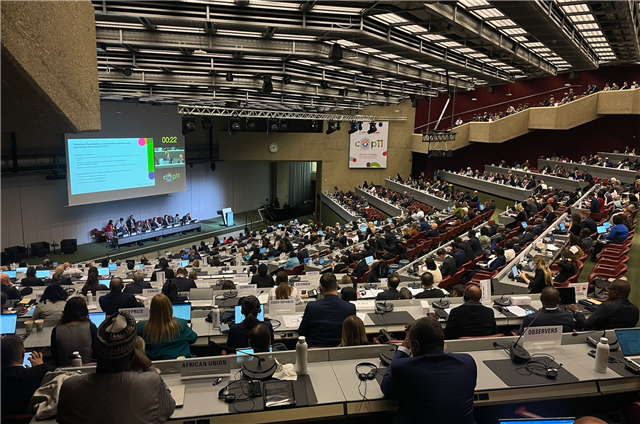
COP11 opens in Geneva at a decisive moment for global tobacco control. With 183 Parties gathering after the momentum of COP10 in Panama, this week needs to be fully dedicated to concrete decisions that strengthen implementation of the WHO FCTC. |
|
|---|
|
The tobacco industry is intensifying its attempts to obstruct progress, from aggressive promotion of new nicotine products to youth-targeted digital marketing and front-group lobbying, making strong adherence to Article 5.3 more crucial than ever. |
|
|
|
|
A key issue on the table is the Expert Group’s report on Forward-Looking Measures under Article 2.1, which outlines innovative pathways such as Tobacco-Free Generation policies and retail reduction approaches that could truly push the epidemic toward an end.
The world is paying attention, and COP11 must become the moment where governments accelerate action and choose measures that protect the next generation. |
|
|---|
|
WHO Director General's Remarks at the COP11 Ministerial Roundtable
|
|
|---|
|
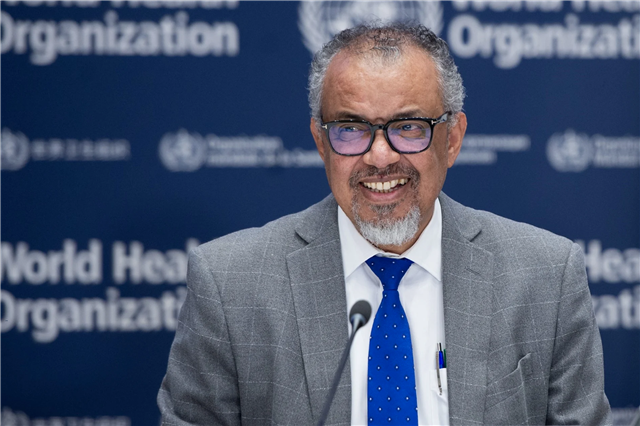
The opening remarks of Tedros Adhanom Ghebreyesus, Director-General of World Health Organization, delivered at the Ministerial Roundtable on “The New Nicotine Challenge: Preventing a New Wave of Youth Addiction” (17 November 2025), underscored that without decisive regulation of emerging nicotine products, the global tobacco epidemic will continue to claim millions of lives annually.
|
|
|
|
|
Marketing addictive, toxic products to teenagers who are not already tobacco users with bright colours, sweet flavours and social media influencers is not harm reduction, it’s harm production.
-
Dr Tedros Adhanom Ghebreyesus,
WHO Director-General |
|
People vs Big Tobacco Monster
|
|
|---|
|
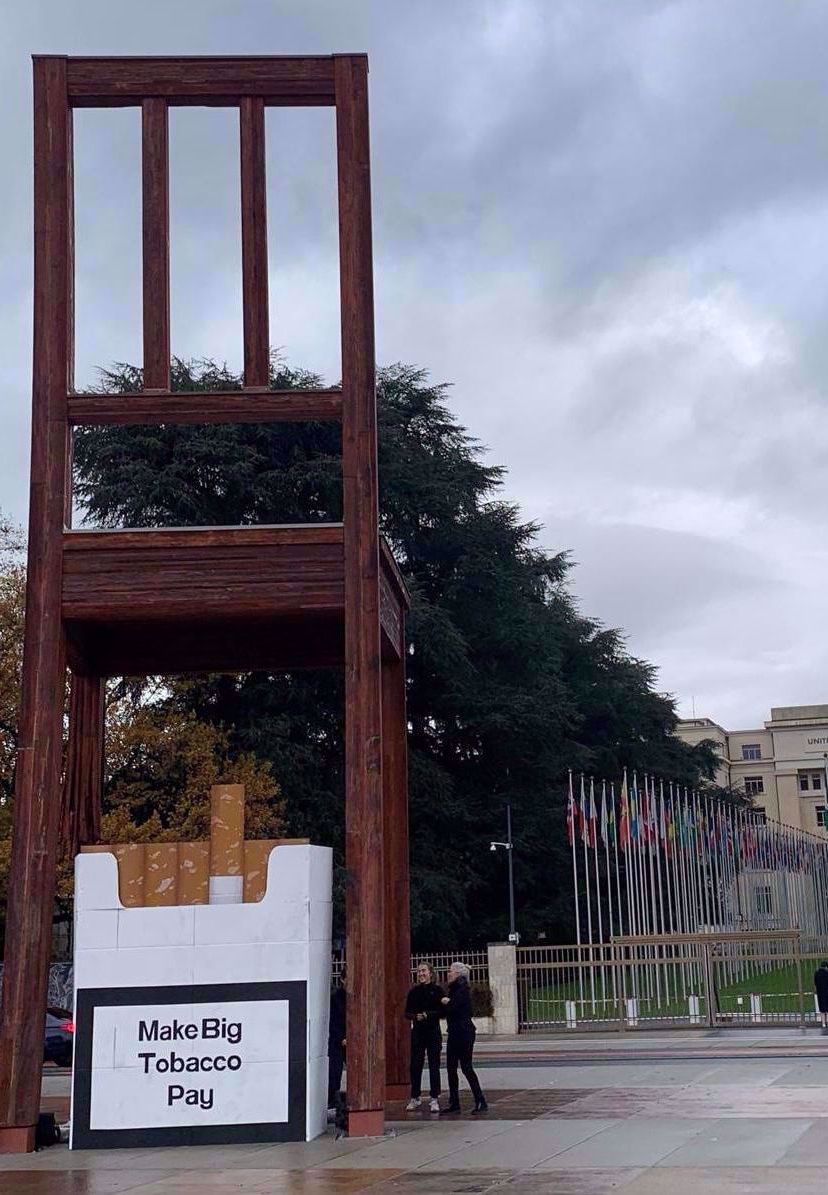
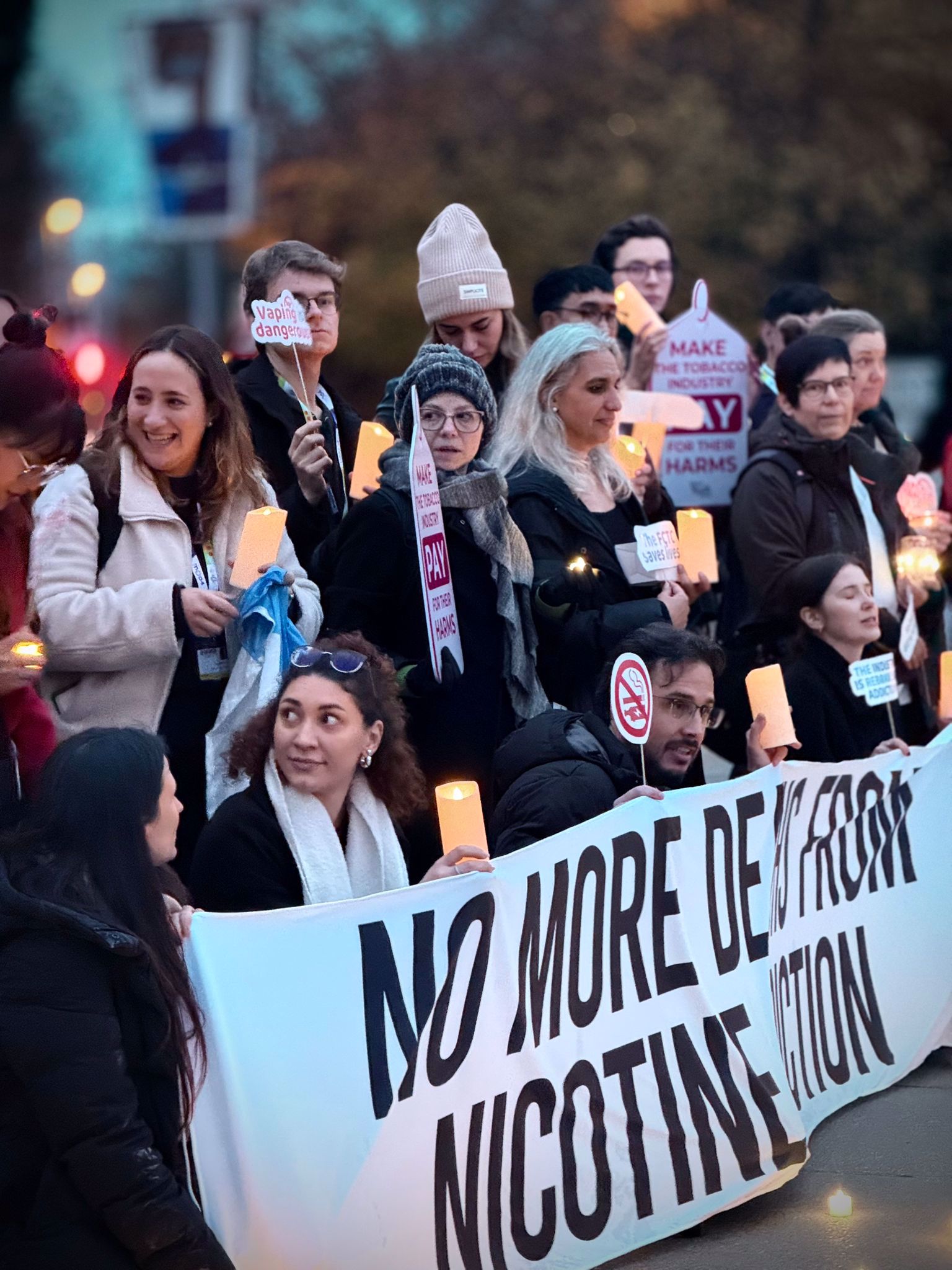
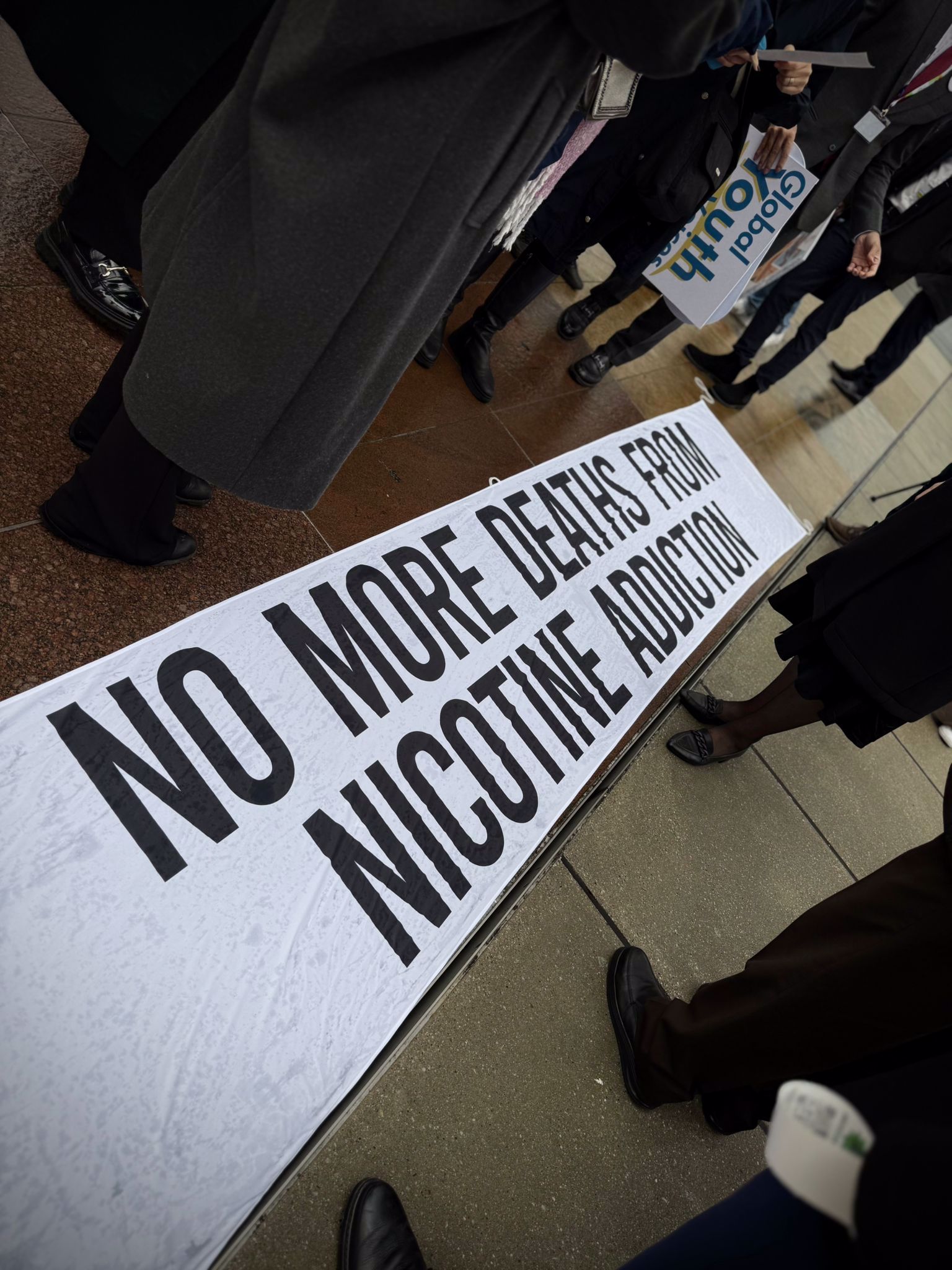
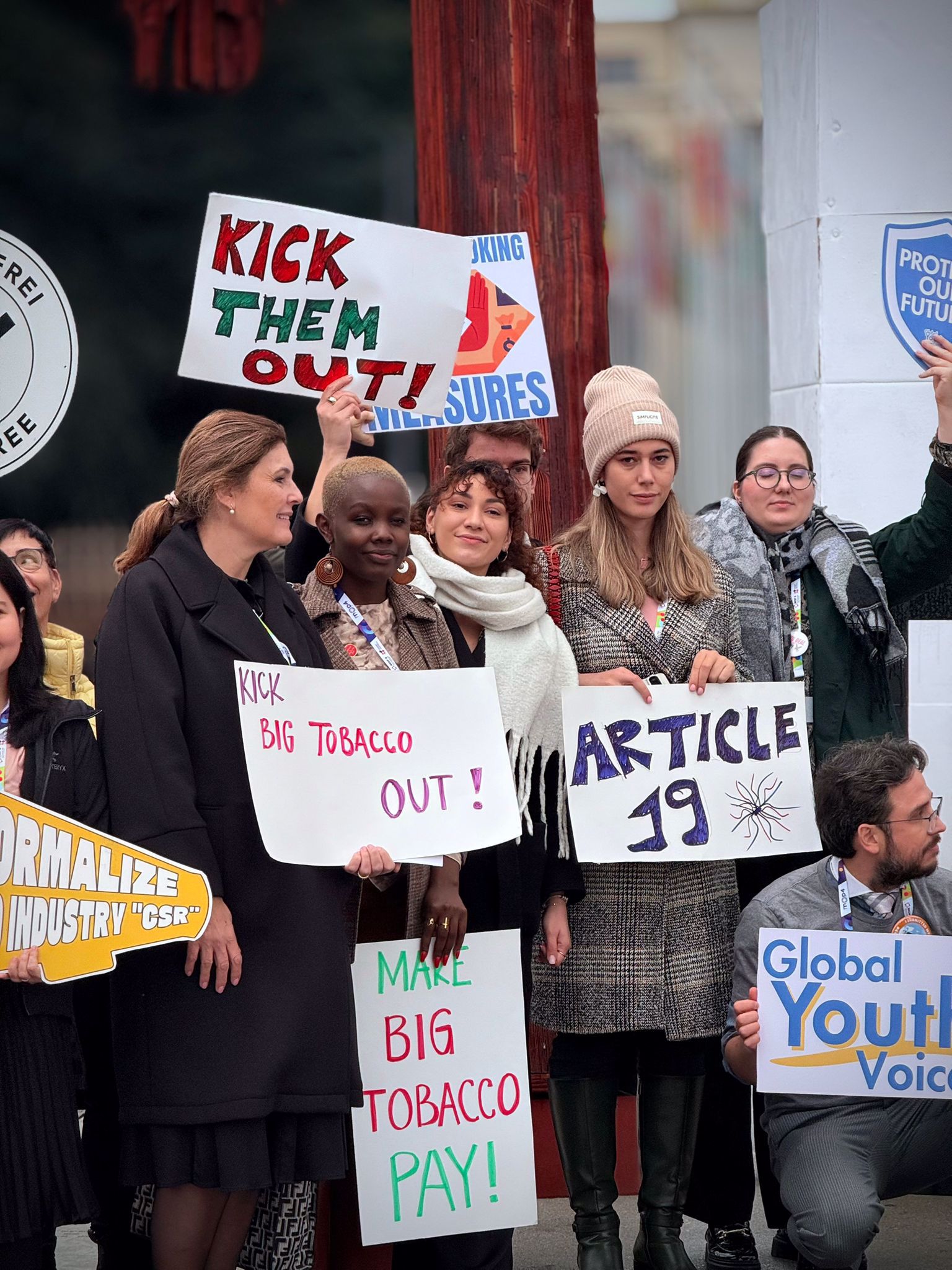
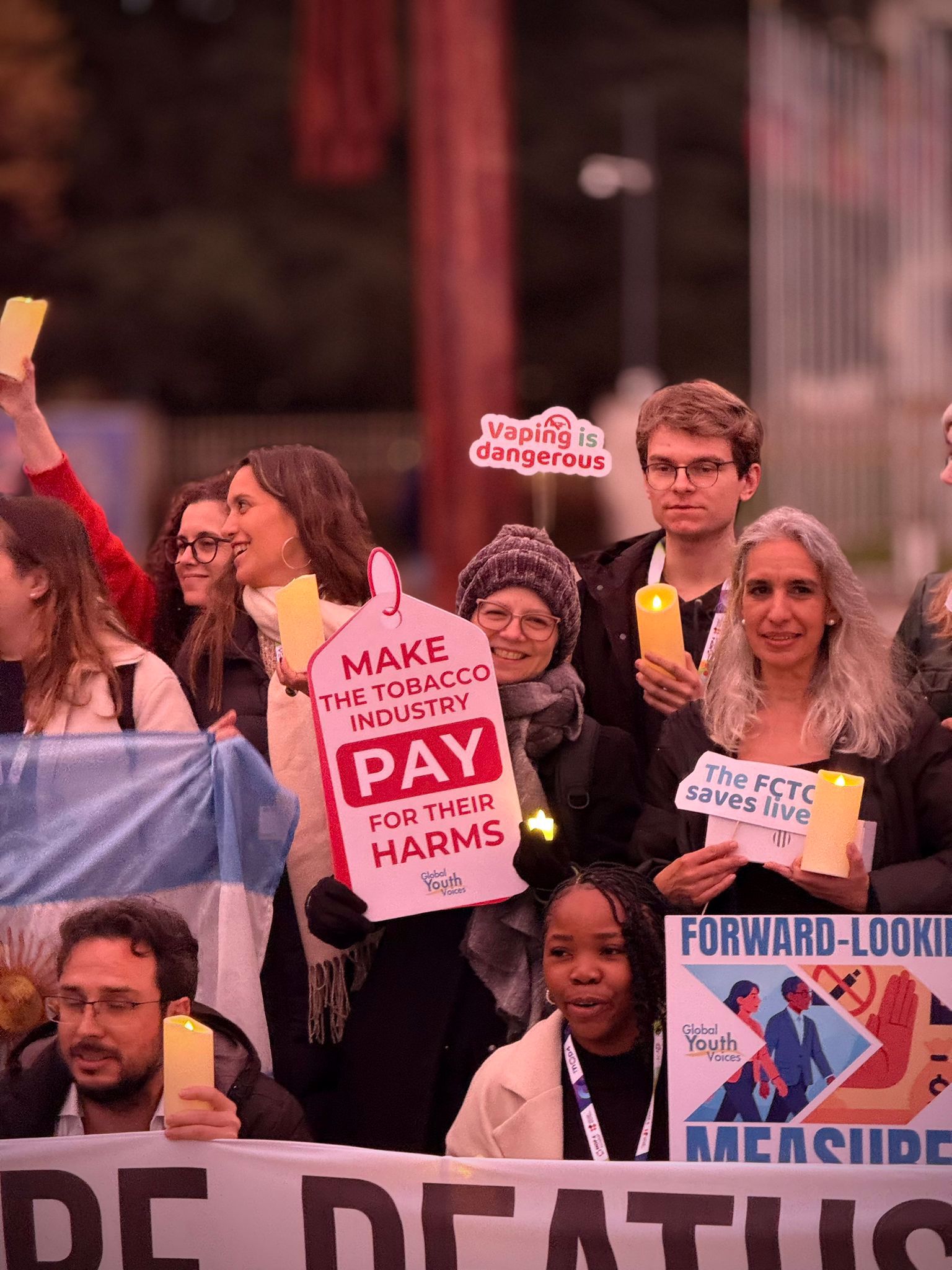
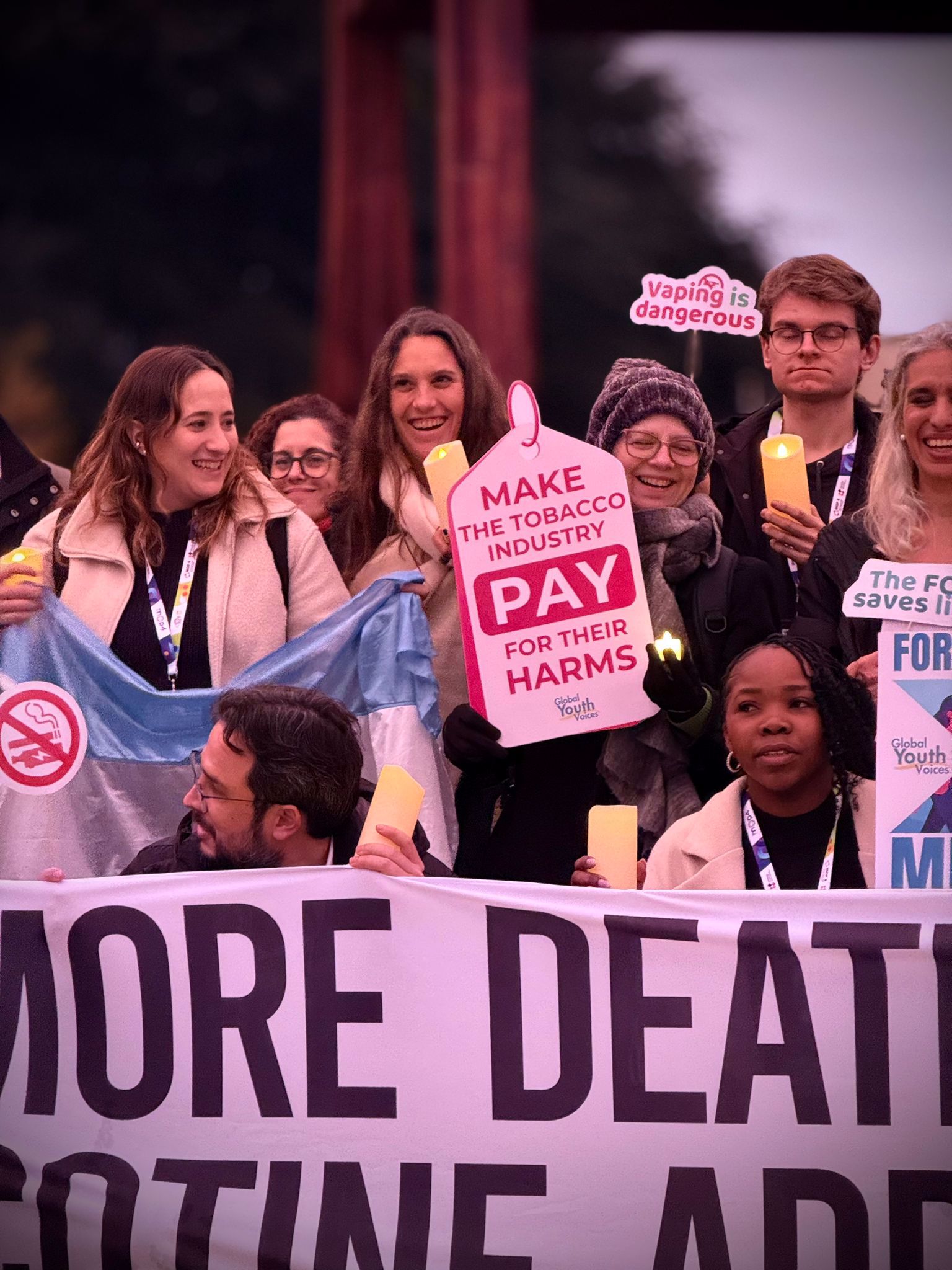
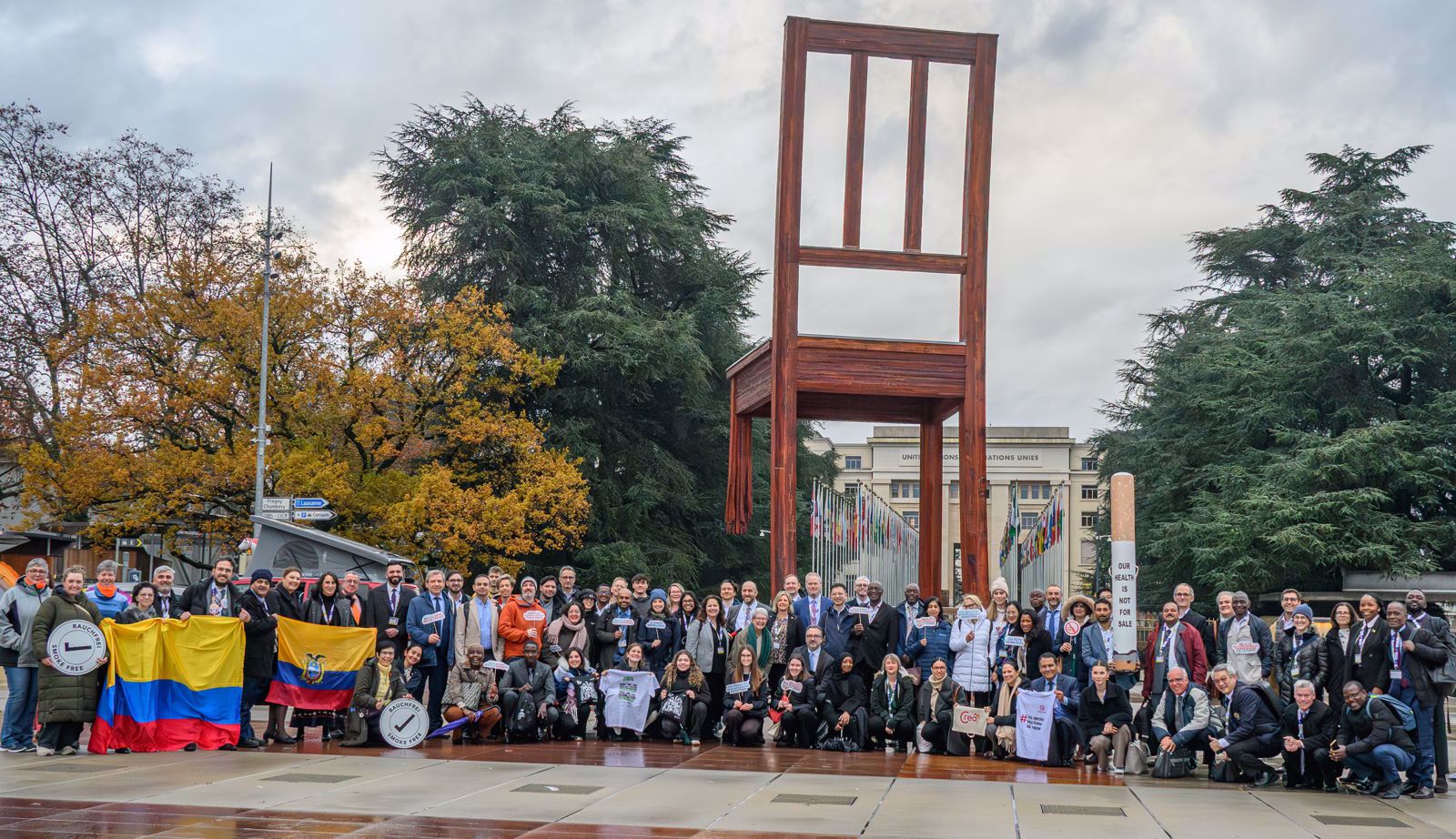
Over two days, young advocates from across the world carried out a series of coordinated activities at Place des Nations in Geneva, next to the emblematic Broken Chair installation. These actions ranged from visual art and live performances to traditional and social media outreach. Beginning on Sunday evening, participants held a candlelit gathering and displayed messages calling attention to the tobacco industry’s manipulative practices. They also urged stronger measures to protect public health and safeguard young people from all tobacco products, including electronic cigarettes.
|
|
|---|
|
At the United Nations Headquarters in Geneva, civil society organizations staged a public action to illustrate the ongoing influence of the tobacco industry in global health policy. The performance featured a large figure emerging from an oversized cigarette pack and symbolically capturing a youth advocate, underscoring the disproportionate impact of tobacco on younger populations and the industry’s continued targeting of them. As the figure approached the venue where delegates were meeting for the global tobacco treaty negotiations, advocates intervened to emphasize the need to keep industry interference out of the decision-making process. |
|
|---|
|
"We're here because people everywhere deserve health, dignity, and a world where corporations cannot profit from harming us. Today, COP11 begins - a historic opportunity to protect public health. Big Tobacco is also here trying to weaken the treaty. We are here with two simple demands:
- Kick Big Tobacco Out - every government must submit its DOI form.
- Make Big Tobacco Pay - support the article 19 decisions."
- Daniel Dorado, Tobacco Campaign Director, Corporate Accountability
|
|
Global declarations have been promoted, online coverage has been implemented by all present observers, and hashtags and messages such as "Youth lives matter" or "Our health is not for sale" have been used in several languages. This demonstration marked the official launch of civil society’s engagement during the treaty discussions, aiming to draw attention to the risks of industry influence and to reinforce calls for stronger safeguards in public health policymaking. |
|
|---|
|
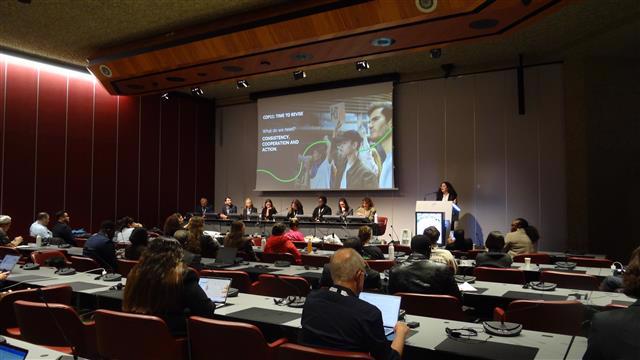
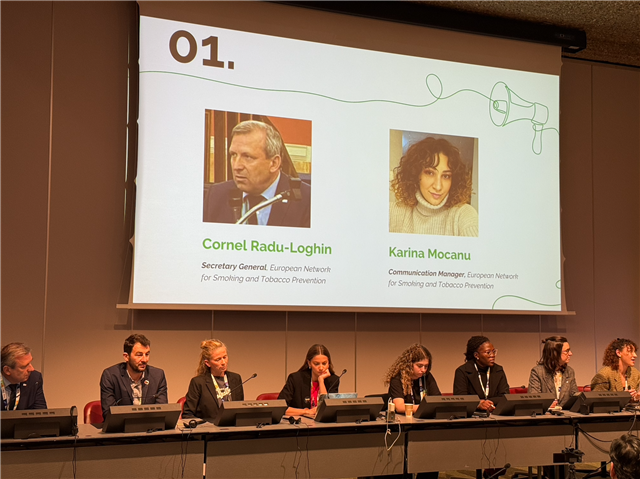
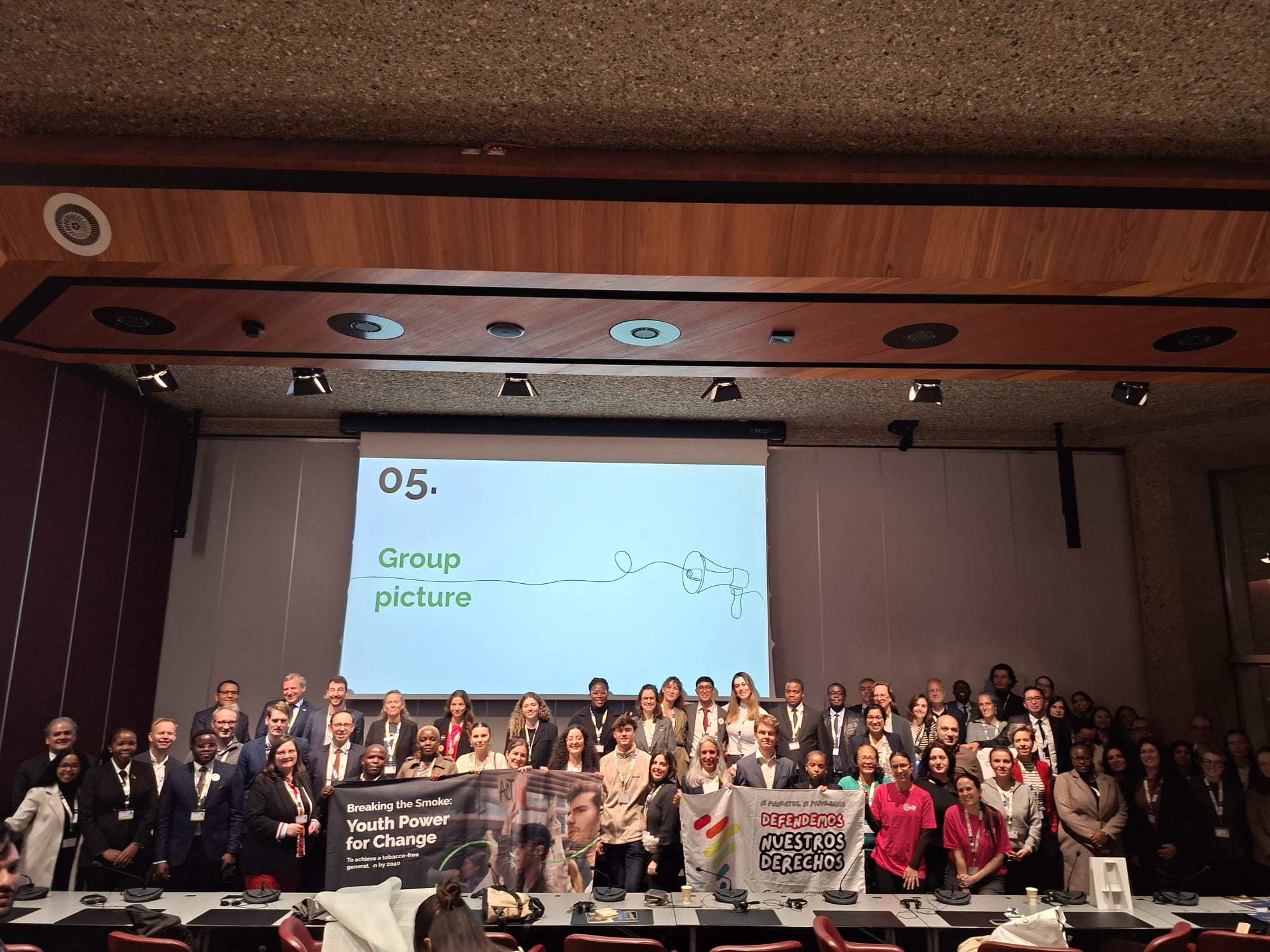
The first side event at the COP11 was the one organised by ENSPnext in collaboration with the Spanish Association Against Cancer and involved a panel of extremely inspirational advocates from all across the globe that discussed best practices to unmask the tobacco and nicotine industry's narratives to advance a tobacco-free generation. From experiences in Latin America, to African context or European landscape, the room agreed unanimously on one thing: a shared a common sense of urgency and empowering the youth is the main thing thst should be addressed immediately if we want to stop the tobacco epidemic.
The main goal of this event was to promote an Intergenerational Manifesto, calling for coherent regulation, shared responsibility, and meaningful action to address the climate and health crises. The document urges decision-makers to move beyond symbolic discussions and deliver on long-standing commitments, stressing that delays undermine public trust, especially among young people.
It outlines three priorities: stronger and more agile prevention policies to counter industry tactics; clear social and environmental accountability for both institutions and the private sector; and broad political and societal consensus, recognising that tobacco control intersects with health, climate, culture and generational equity. The manifesto aims to harmonise regulation and elevate awareness across sectors to enable coordinated, effective action. |
|
|---|
|
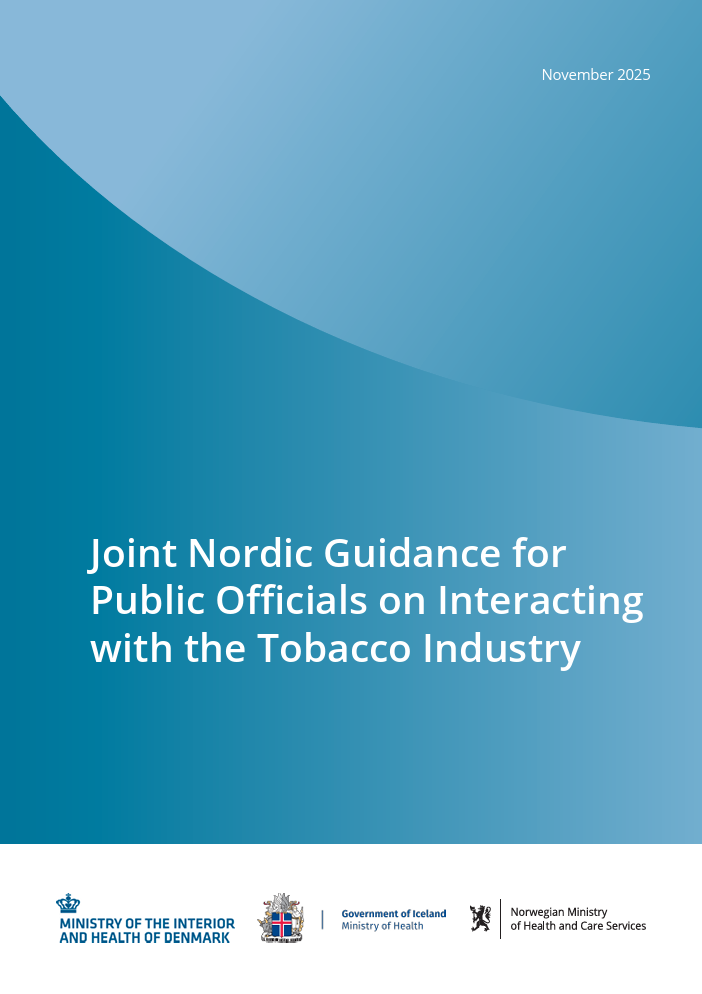
Joint Nordic Guidance for Public Officials on Interacting with the Tobacco Industry
|
|
|---|
|
Tobacco use remains a major cause of preventable death, disease, and health inequalities in the Nordic region. In line with World Health Assembly resolution WHA54.18, the tobacco industry has long sought to undermine public health policymaking. |
|
|---|
|
All Nordic countries are Parties to the WHO Framework Convention on Tobacco Control (FCTC), which seeks to protect current and future generations from the harms of tobacco. Under Article 5.3, governments must shield tobacco control policies from industry interference. This Guide, endorsed by the health ministers of Denmark, Iceland, and Norway, affirms that these protections also apply to emerging products such as e-cigarettes, nicotine pouches, and heated tobacco products. It summarizes the legal obligations of public agencies under the FCTC and provides practical, Nordic-specific guidance to support comprehensive tobacco control efforts. Ministries of Health remain available for clarification on its application. |
|
|
|
|
All publications from the TPC Journal can be found here. |
|
|---|
|
Do you have an event coming up or content to promote? Would you like to share your best practices or inform us about local initiatives?
Share your work and promote your activities among 3.500+ colleagues in Europe and around the globe via The Network - ENSP newsletter |
|
| | |
|
|
|