|
Welcome to the ENSP newsletter, your source of information on tobacco control across the WHO European Region. At ENSP, our mission is to end the tobacco epidemic and beat cancer through collaborative efforts, research, and advocacy.
Join us in our journey to achieve a tobacco- and nicotine-free world! |
|
|---|
|
Launch of the 5th Edition of the ENSP Tobacco and Nicotine Dependence Treatment Guidelines
|
|
|---|
|
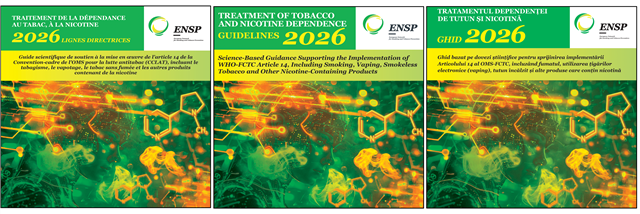
We are excited to announce the release of the 5th Edition of the ENSP Tobacco and Nicotine Dependence Treatment Guidelines! This updated version includes translations in English, French and Romanian. |
|
|
|
|
| |
|
We encourage you to review these updates and incorporate them into your practice. Together, we can continue to lead the way in effective tobacco and nicotine dependence treatment across Europe.
Thank you for your ongoing commitment to tobacco control and public health!
|
|
|---|
|
Protecting the Next Generation:
Patriarch Bartholomew Addresses ENSP
|
|
|---|
|
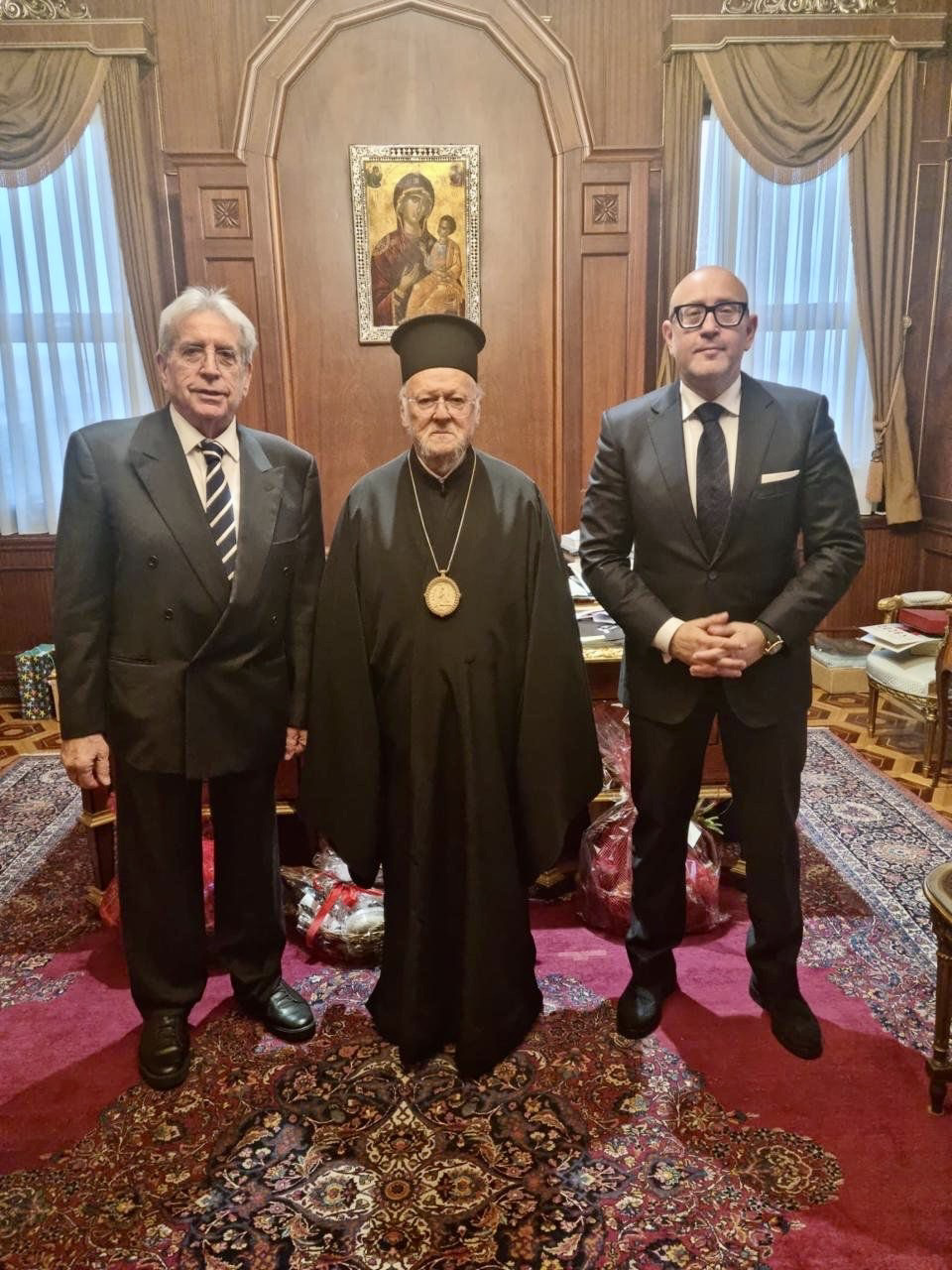
A high-level meeting was convened at the Ecumenical Patriarchate of Constantinople between Professor Panagiotis Behrakis, President of the ENSP, and Professor Theodoros Alexopoulos, with His All-Holiness the Ecumenical Patriarch Bartholomew. The meeting addressed the critical issue of protecting children and young people from nicotine dependence, emphasizing the imperative of prevention, education, and coordinated societal action.
This engagement represents a prominent initiative, highlighting the complementary roles of scientific evidence-based policy and spiritual leadership in the advancement, protection, and promotion of global public health.
|
|
|
|
|
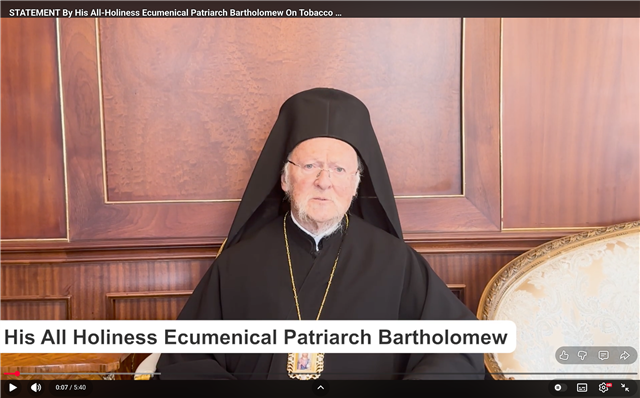
Following this meaningful exchange, His All-Holiness kindly recorded a video message addressed to ENSP, acknowledging the Network’s long-standing commitment to safeguarding youth and supporting a society free from tobacco and nicotine addiction.
We warmly invite all ENSP members and partners to view and share this important message.
|
|
|---|
|
In particular, we encourage colleagues and organizations in Orthodox countries to use this message as a valuable resource in their daily work, supporting prevention efforts, strengthening community engagement, and reinforcing the protection of children and young people from the growing threats of nicotine addiction and emerging products targeting youth.
This powerful call reminds us that protecting the next generation requires united action across all sectors of society.
This initiative represents an important first step in engaging all sectors of society in our shared mission to protect children and young people from nicotine addiction. We hope that, with your continued support, this example will encourage similar commitments from other churches, faith communities, and key societal stakeholders, strengthening a broad and united response in support of public health.
|
|
|---|
|
Join the 4P-CAN Academy:
Social Determinants of Health and Network Methods |
|
|---|
|
We invite you to join the 4P-CAN Academy, an online course series under Task 7.2 led by INOMED. Titled
“Social Determinants of Health: Networks, Data, and Methods”, the programme explores how socio-cultural factors influence health outcomes and behaviours. |
|
|
|
|
Drawing on sociology, public health and data analytics, the academy introduces practical tools for quantitative research, with a focus on Social Network Analysis (SNA) and Personal Network Analysis (PNA). Participants will work with real case studies and data from the 4P-CAN Living Lab, including topics such as obesity normalization, smoking, eating behaviours and COVID-19 vaccination. |
|
|---|
|
Course schedule and modules
All sessions will take place online, from 16:00 to 19:00.
Module I (6 March): Sociological instruments for measuring social determinants of health
Module II (13 March): Social and Personal Network Analysis – Introductory notions
Module III (20 March): Methods and Techniques in SNA / PNA research
Module IV (2 April): Applications of PNA in the 4P-CAN Living lab Topics: BMI/Obesity normalization, Smoking behaviours, Eating behaviours, COVID-19 vaccination
Module V (9 April): Visualization of network data and public engagement
Module VI (17 April): Network analysis and health policies |
|
We encourage you to join because this is a unique opportunity to gain skills in designing quantitative research and applying Social Network Analysis (SNA) and Personal Network Analysis (PNA) to public health challenges, all while working directly with case studies and real data from the 4P-CAN Living Lab. The course itself is designed to be engaging and interactive, using gamified evaluation methods that enhance both learning and motivation.
Best of all, no prior expertise is required, the curriculum being tailored for professionals across all areas of the consortium, with no prerequisites in statistics or social research methods. The only requirements are a good command of English and a commitment to active participation. |
|
|---|
|
The registration deadline is 28 February 2026.
Access links for the webinars will be shared after registration.
For any questions, please do not hesitate to contact us at
|
|
|---|
|
|
EU-Funded RELIEF Project launch in Cyprus |
|
|---|
|
Rising experimentation with e-cigarettes and other emerging nicotine products among children is an increasing public health concern across Europe. Addressing this trend requires prevention efforts that begin early in life and are grounded in scientific evidence. In response, the EU-funded project InteRvening EarLier in life for hEalthier liFestyles (RELIEF) was officially launched on 13–14 January 2026 in Limassol, Cyprus. |
|
|---|
|
The RELIEF Project Kick-off Meeting took place at the Municipal Library of the Cyprus University of Technology, bringing together project partners from Cyprus, Greece, Iceland, Belgium, Italy, and Spain, with participation both in person and online. The meeting marked the start of a three-year collaboration coordinated by the Centre for Social Innovation, aimed at promoting healthier lifestyles through early prevention. |
|
|
|
|
Discussions covered all project work packages, including communication and dissemination activities, development of a digital health toolkit, research and mapping of existing initiatives, school-based programme implementation, and the translation of research evidence into policy recommendations. |
|
|---|
|
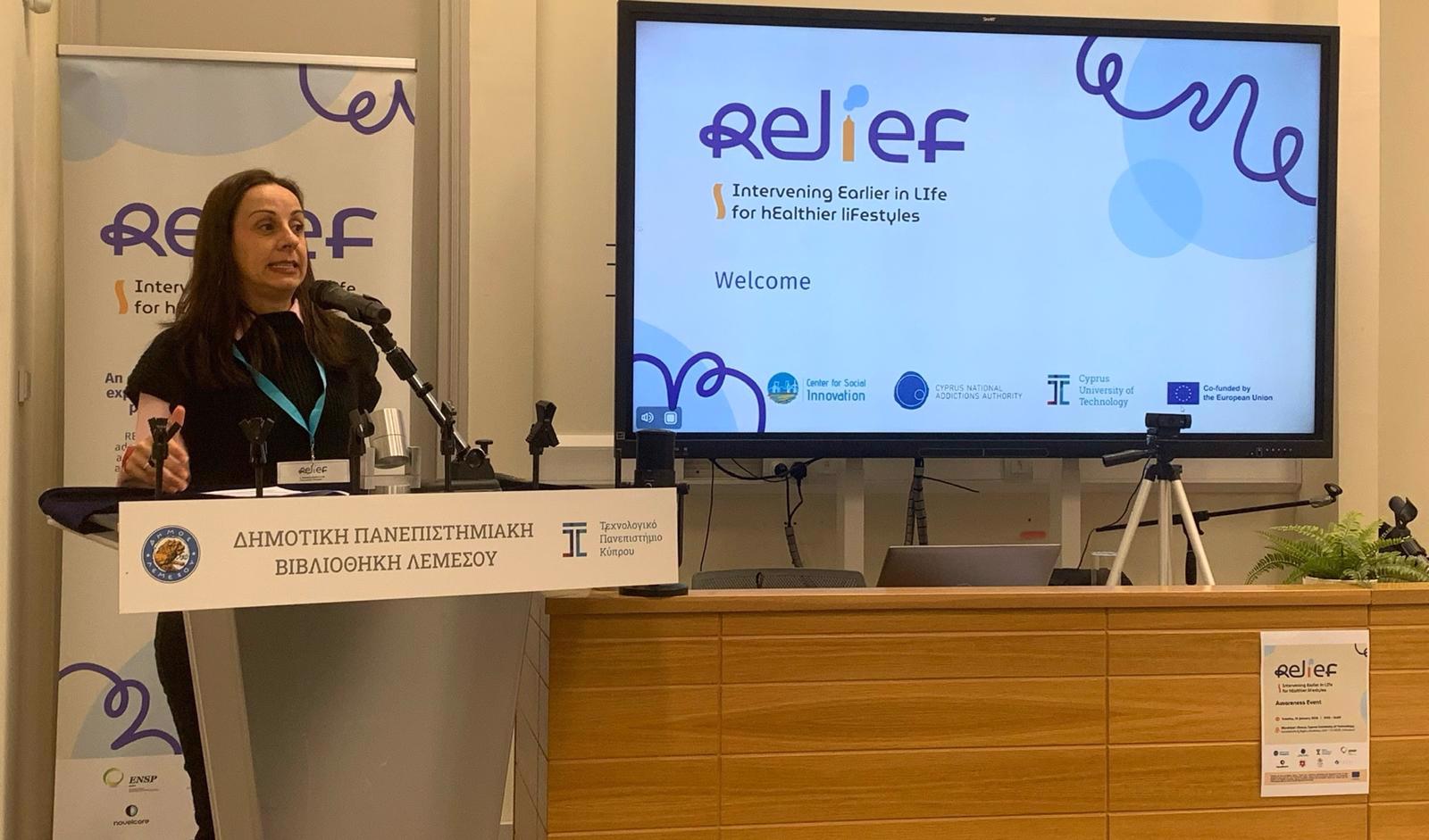
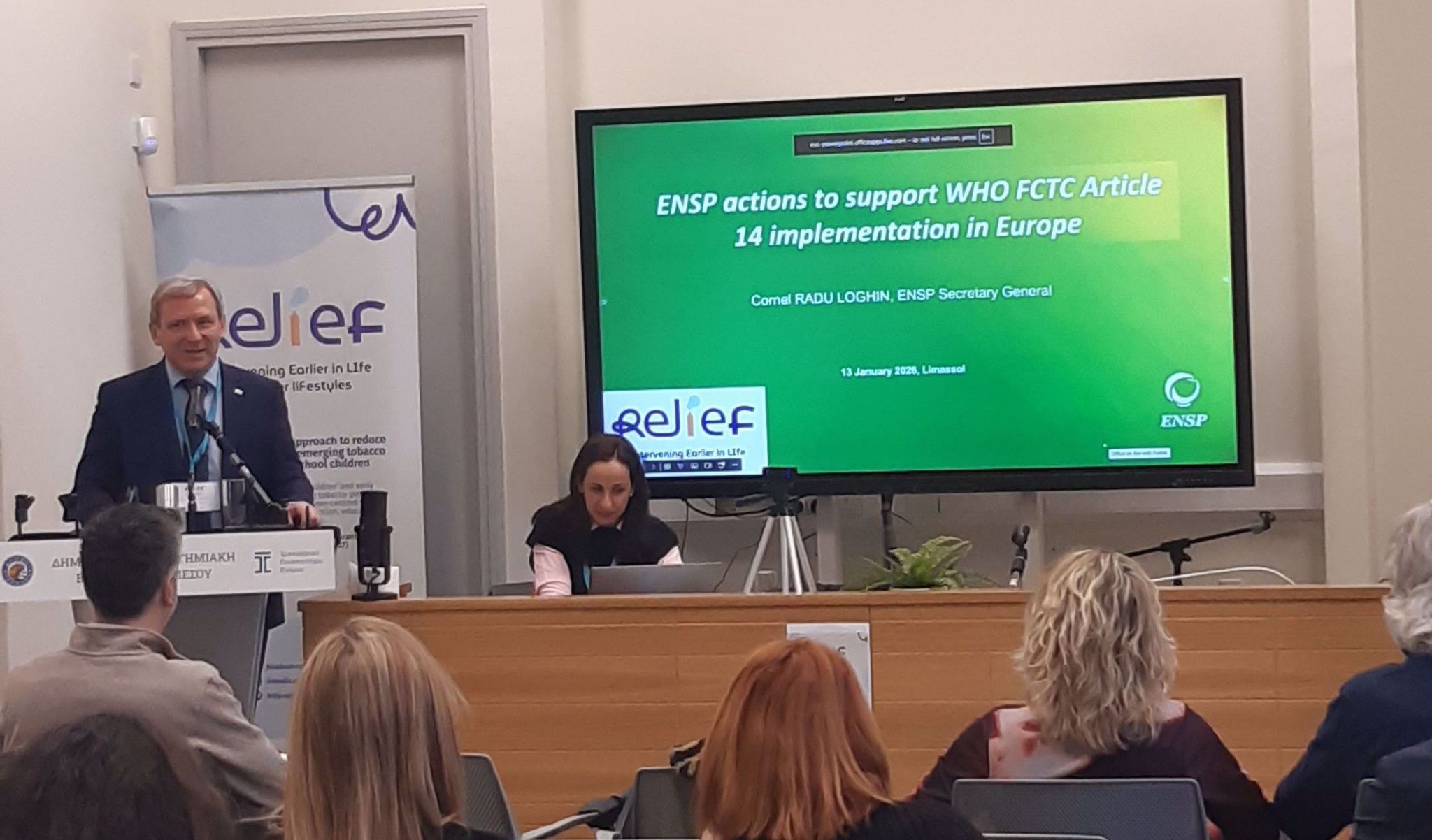
An awareness event held on 13 January 2026, shortly before the Kick-off Meeting and at the same venue, further underlined the urgency of early prevention. The event brought together researchers, policymakers, and civil society organisations to discuss evidence-based strategies to address the growing use of e-cigarettes and other nicotine products among children. |
|
|
|
|
Additional contributions from the European Network for Smoking and Tobacco Prevention (ENSP) and a presentation on the Icelandic Prevention Model illustrated the effectiveness of coordinated, community-based, and evidence-driven approaches in reducing youth substance use. |
|
|
|
|
The event concluded with a shared recognition that protecting children from emerging tobacco and nicotine products requires early, integrated, and scientifically grounded action. Together, the awareness event and the Kick-off Meeting established a clear framework and strong momentum for the implementation of the RELIEF project across Europe over the next three years. |
|
|---|
|
JA PreventNCD team invites you to subscribe to the Healthy Living Environments newsletter!
|
|
|---|
|
The newsletter showcases local and regional initiatives across Europe that promote healthier environments and address the social determinants of non-communicable diseases, the roots of Europe’s cancer and broader disease burden. |
|
|---|
|
Within this broader focus on living environments, it includes regular updates on tobacco prevention, exploring how smoke-free policies, urban design, community engagement and health promotion strategies contribute to reducing tobacco exposure and creating healthier spaces for all.
Take a look at one of the articles from a previous issue here.
|
|
|
|
|
JA PreventNCD is Europe’s largest joint public health initiative to date, uniting over 100 partners from 25 countries to tackle cancer and other non-communicable diseases — the leading causes of preventable death in Europe.
|
|
|---|
|
First major market implementing a dedicated excise duty specifically for vaping products combined with an official duty stamp scheme to enforce compliance
|
|
|---|
|
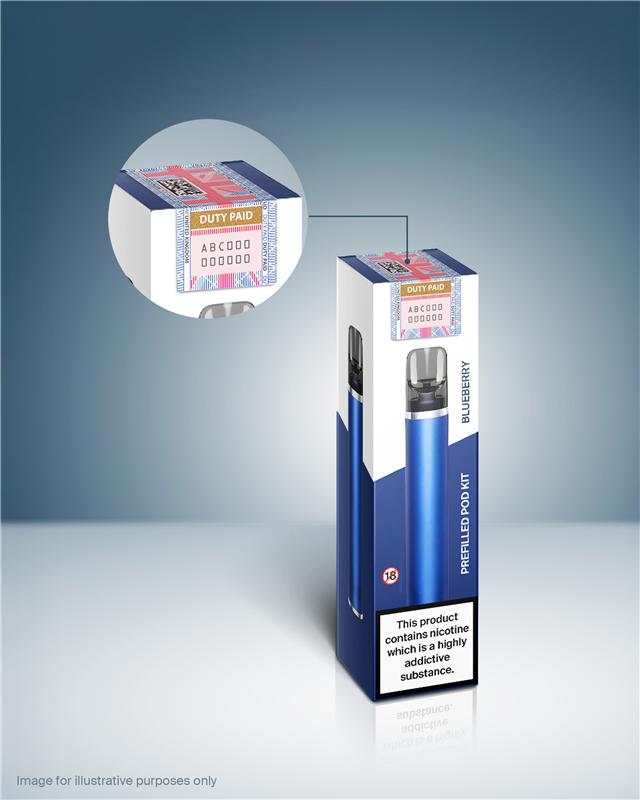
Swiss technology company SICPA secured a landmark traceability contract, in partnership with Spectra Systems Corporation’s subsidiary, Cartor Security Printers (Cartor), reinforcing its global leadership in secure track and trace (T&T) technology. The program will deliver robust traceability solutions to His Majesty’s Revenue and Customs (HMRC) for vape products in the United Kingdom.
From 1 October 2026, vaping products released for sale in the UK will be required to carry an official duty stamp confirming that the applicable excise tax has been paid. |
|
|
|
|
The UK Government scheme aims to strengthen tax compliance and reduce the circulation of illicit products by introducing secure, traceable stamps similar to those already used for tobacco. Manufacturers and importers will need HMRC approval to purchase and apply the stamps before placing products on the UK market. |
|
|---|
|
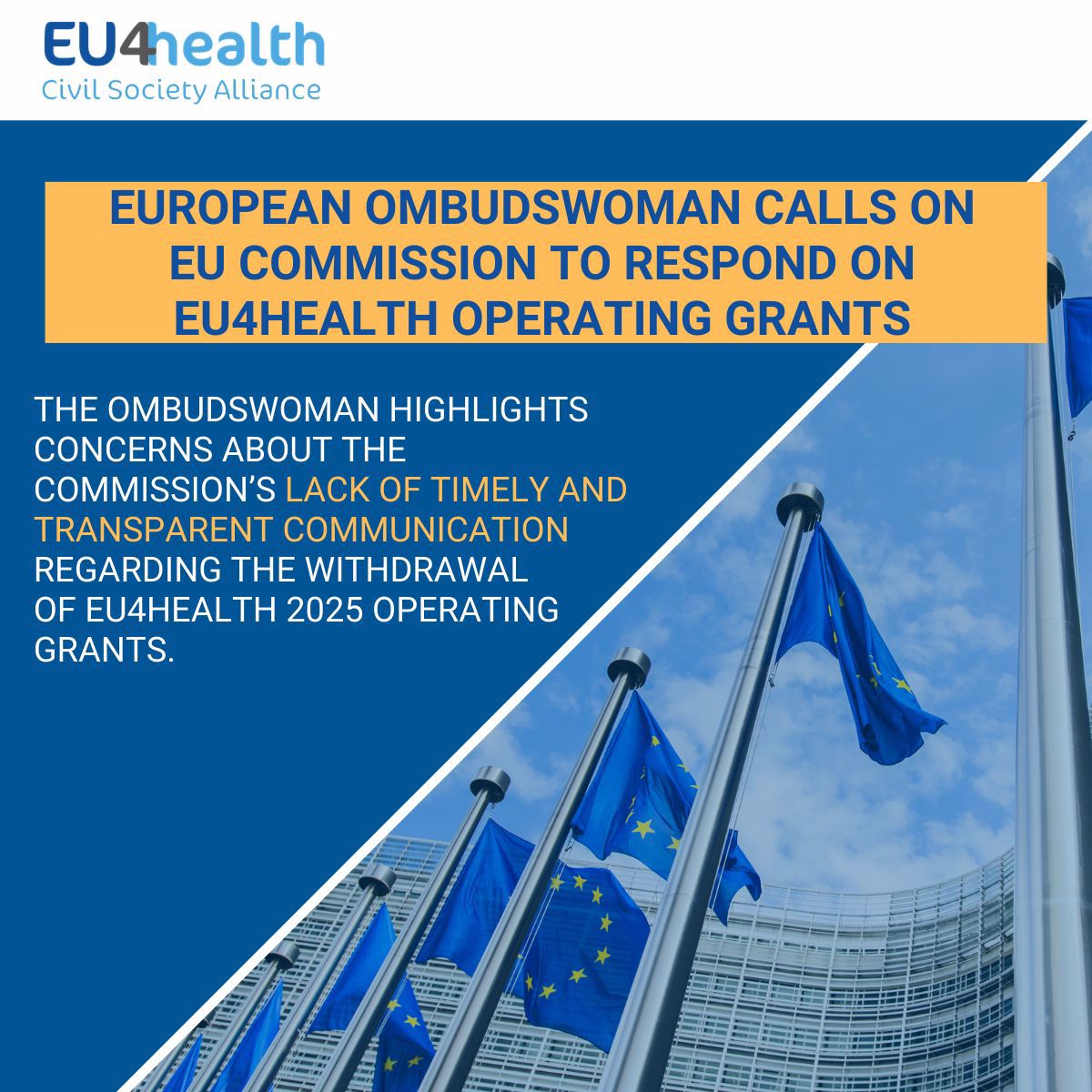
EU Ombudswoman calls on EU Commission to respond to EU4Health Operating Grants
|
|
|---|
|
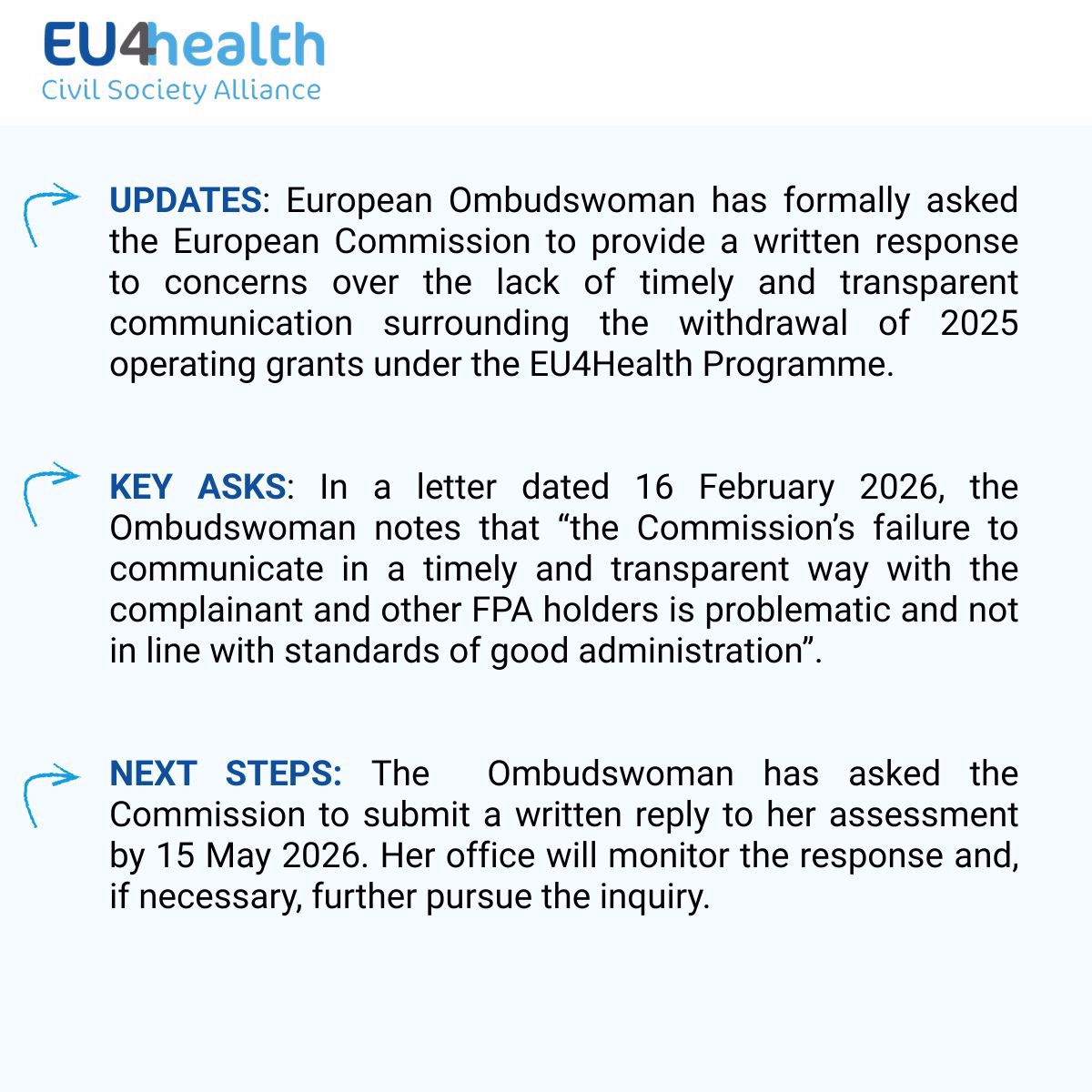
The European Ombudswoman Teresa Anjinho has formally asked the European Commission to provide a written response regarding the withdrawal of 2025 operating grants under the EU4Health Programme.
In her letter dated 16 February 2026, the Ombudswoman states that the Commission’s failure to communicate in a timely and transparent way with the complainant and other Framework Partnership Agreement holders is “problematic and not in line with standards of good administration”. |
|
|
|
|
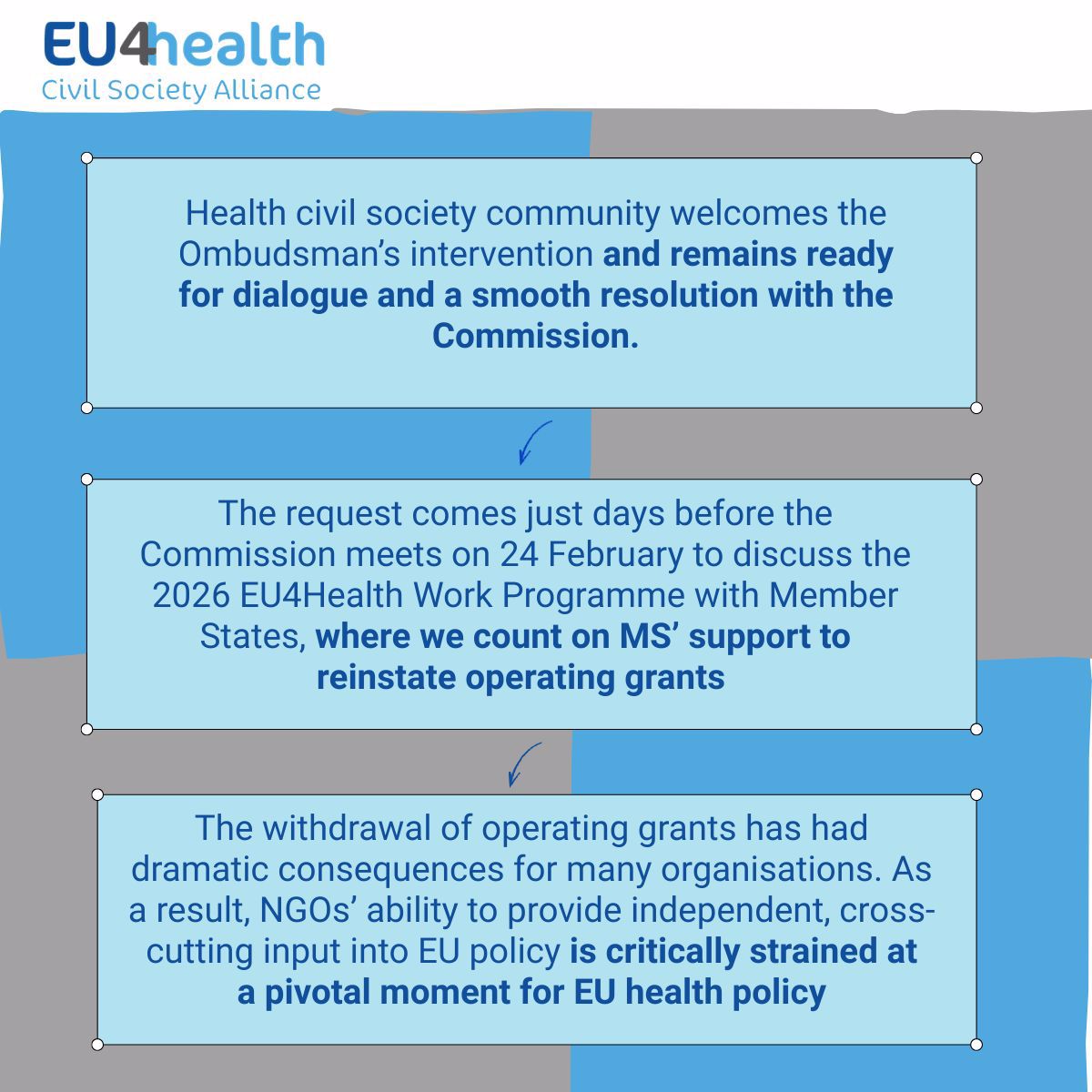
For health NGOs and patient organisations across Europe, operating grants are essential. They sustain core organisational functioning and ensure civil society can contribute meaningfully to EU public health priorities.
This request comes just days before Member States meet on 24 February to discuss the 2026 EU4Health Work Programme.
We count on Member States’ support to reinstate operating grants and safeguard civil society’s role in EU health policy. |
|
|---|
|
|
All publications from the TPC Journal can be found here. |
|
|---|
|
|
Shalini Bassi, Manu Raj Mathur, Monika Arora, Tina Rawal, Rajmohan Panda, Ali Golkari
Natchaya Palacheewa, Pramote Thangkratok
Alen Josef A. Santiago, Samantha J. Ackary, Patrik James D. L. Cabrera, Gabriele Dominique P. Domingo
Heajung Lee, Jaeyong Shin, Jae Woo Choi
Hongying Daisy Dai, Chenxi Shi, Sara Reyes, Summer Woolsey
Jennifer Sweetman, Lisa Huddlestone, Heidi Stevens, Petal Petersen Williams, Emily Shoesmith, Moira Leahy, Claire Paul, Elena Ratschen
Antti Kyrö, Kalle Kainiemi, Antti Malmivaara, Sara Taskinen, Tiina Laatikainen
Efthimios Zervas, Niki Matsouki, Charikleia Tsipa, Zoe Gareiou
Danyi Li, Linyun Fu, Nathan Davies, Steve Sussman, Mary A. Pentz
Saravanan Sampoornam Pape Reddy, Delfin Lovelina Francis, Manish Rathi, Sukhbir Singh Chopra
Luis F. Gonzalez, Theodore C. Friedman |
|
Do you have an event coming up or content to promote? Would you like to share your best practices or inform us about local initiatives?
Share your work and promote your activities among 3.500+ colleagues in Europe and around the globe via The Network - ENSP newsletter |
|
| | |
|
|
|