|
Welcome to the ENSP newsletter, your source of information on tobacco control across the WHO European Region. At ENSP, our mission is to end the tobacco and nicotine epidemic and beat cancer through collaborative efforts, research, and advocacy. |
|
|---|
|
PALAU CALLS ON UNITED NATIONS TO REVIEW NICOTINE
The molecule behind 7 million deaths a year has never been regulated. A Pacific island nation of 18,000
is trying to change that
|
|
|---|
|
|
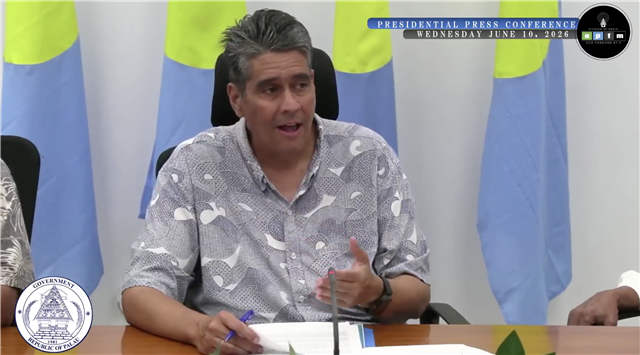
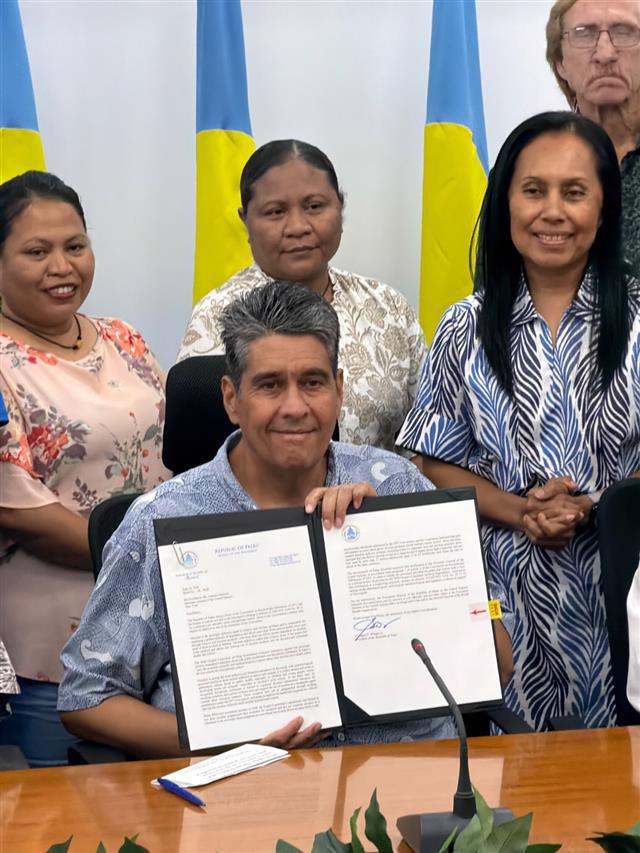
Koror, Palau (June 10, 2026) — The Republic of Palau has become the first country in history to formally ask the United Nations to place nicotine, the addictive molecule in cigarettes, vapes and pouches, under global drug control.
Tobacco and nicotine products kill more than seven million people every year. Without decisive action, the WHO projects that up to one billion people could die from tobacco-related diseases this century.
|
|
|---|
|
“We may be a small nation, but the scale of a problem has never determined who acts on it,” said President Surangel S. Whipps Jr., Republic of Palau.
“Millions die every year. More than a billion are dependent on nicotine — most of them hooked as children. We could not look away. We call on governments around the world to join us in asking the United Nations to finally treat nicotine like the toxic and addictive drug that it is.”
|
|
No government had initiated such a process in more than 75 years of international drug control. Nicotine is among the few major addictive substances not scheduled under UN law. If the vote goes ahead, it would be the first time the international community applied the same rules of trade, monitoring, and control to nicotine as to other addictive substances.
Nicotine is one of the most addictive substances in the world. The U.S. Surgeon General concluded in 1988 that the processes driving nicotine addiction are similar to those behind addiction to heroin and cocaine, a finding that recent neurobiological evidence has only strengthened since. Nicotine’s health harms extend well beyond tobacco addiction. It is directly toxic, particularly to developing brains, with lasting impacts on cognition as well as cardiovascular health.
Today’s e-cigarettes can deliver nicotine as fast as a cigarette, and both e-cigarettes and oral nicotine pouches can deliver higher doses than a cigarette. More than 15 million adolescents aged 13 to 15 use e-cigarettes worldwide, nine times the rate of adults in the same countries.
|
|
|---|
|
Palau's record: protecting children from nicotine |
|
|---|
|
Palau has taken some of the strongest measures in the world to keep nicotine products away from children. In 2023, President Whipps signed legislation prohibiting the importation, distribution, selling, possession, and use of electronic cigarettes, following evidence that nearly half of Palauan adolescents had used e-cigarettes. In 2025, Palau ranked second best out of 100 countries in the Tobacco Industry Interference Index, indicating minimal industry influence on its public health policy.
|
|
|---|
|
“This is about our children,” said First Lady Valerie R. Whipps, Chair of the Coalition for a Tobacco Free Palau.
“A new generation of young people across the Pacific are being targeted by products that have never been critically reviewed under UN law. Every child has the right to grow up free from manufactured nicotine addiction, no matter how small their island.”
|
|
A regulatory gap the industry has used to its advantage |
|
|---|
|
Decades of tobacco control have delivered historic gains: smoke-free environments, graphic warnings, higher tobacco taxes and advertising bans. But existing regulation targets tobacco products, not nicotine as a molecule, and it was written for a world of cigarettes and cigars. Since then, companies have rolled out a new generation of products, including vapes and nicotine pouches in thousands of sweet flavours, branded as “tobacco-free” while delivering the same addictive molecule. They have moved faster than regulators can follow. Placing nicotine under international drug control would end that cycle.
|
|
|---|
|
“As someone who has lived with nicotine addiction, I know firsthand how powerful and destructive it can be,” said Kambes Kesolei, Vice Chairman of the Coalition for a Tobacco Free Palau, and president of the Belau Association of Non-Governmental Organizations.
“I have seen the impact it has had on the lives of many people in Palau and around the world, and as a health advocate today, I support any effort we can make to raise awareness of the dangers of this drug.”
|
|
The notification and process
Palau's notification is submitted under Article 2 of the 1971 Convention on Psychotropic Substances. It requires the WHO Expert Committee on Drug Dependence to conduct a critical review of nicotine. The Committee's recommendation will go to the Commission on Narcotic Drugs — 53 member states on a rotating basis — which votes by two-thirds majority. A vote is targeted for March 2028.
Relationship to existing tobacco control under the WHO Framework Convention on Tobacco Control (WHO FCTC)
Palau's initiative is designed to complement, not replace, existing global tobacco control efforts. The international tobacco control treaty has delivered historic gains but does not extend to nicotine as a molecule across all its current and future delivery forms. Scheduling nicotine under the 1971 Convention would add a molecule-based layer of control alongside existing product-based regulation, and is in line with FCTC Article 2.1 on Forward-Looking Measures “to better protect human health”.
Medical exemptions and access to cessation treatment
The 1971 Convention includes a mechanism to exempt preparations with proven medical use and low abuse potential from the full scope of controls. Approved nicotine replacement therapies — patches, gums, lozenges and inhalers — would be expected to fall under this category. What is ultimately exempted is a decision for member states.
Scientific supporting information
Scientific supporting information on nicotine, prepared in accordance with WHO Expert Committee on Drug Dependence critical review requirements and submitted in support of Palau’s notification under the 1971 Convention, is available at www.nicotinereview.org
About the Republic of Palau
Palau is an archipelago of approximately 340 islands in the western Pacific Ocean, with a population of around 18,000. Palau became an independent nation in 1994, ratified the 1971 Convention on Psychotropic Substances in 1998, and ratified the WHO Framework Convention on Tobacco Control in 2004. Palau played a vital role in the FCTC negotiation process and in including the FCTC in the Sustainable Development Goals, via SDG Target 3.a. More recently, Palau prohibited e-cigarette use via the enactment of the RPPL 11-27. The Tobacco Industry Interference Index, which measures the degree to which governments keep tobacco industry interests out of public health policy, ranked Palau second best out of 100 countries in 2025 (Tobacco Industry Interference Index 2025).
|
|
|---|
|
|
For all media requests, contact: media@nicotinereview.org. A small team is available across time zones for quick responses. |
|
|---|
|
Palau has taken a historic step.
We invite all nations to follow its example by submitting their own notifications to the United Nations and supporting a global reassessment of nicotine—the addictive substance that continues to threaten the health and future of millions of children and young people worldwide. |
|
|
All publications from the TPC Journal can be found here. |
|
|---|
|
Do you have an event coming up or content to promote? Would you like to share your best practices or inform us about local initiatives?
Share your work and promote your activities among 4.000+ colleagues in Europe and around the globe via The Network - ENSP newsletter |
|
| | |
|
|
|